
Total products
£0.00
Delivery : calculated at next step
Total tax included
£0.00
Manufacturer 2-year warranty
Sold and shipped by Ligne Roset
14-day returns

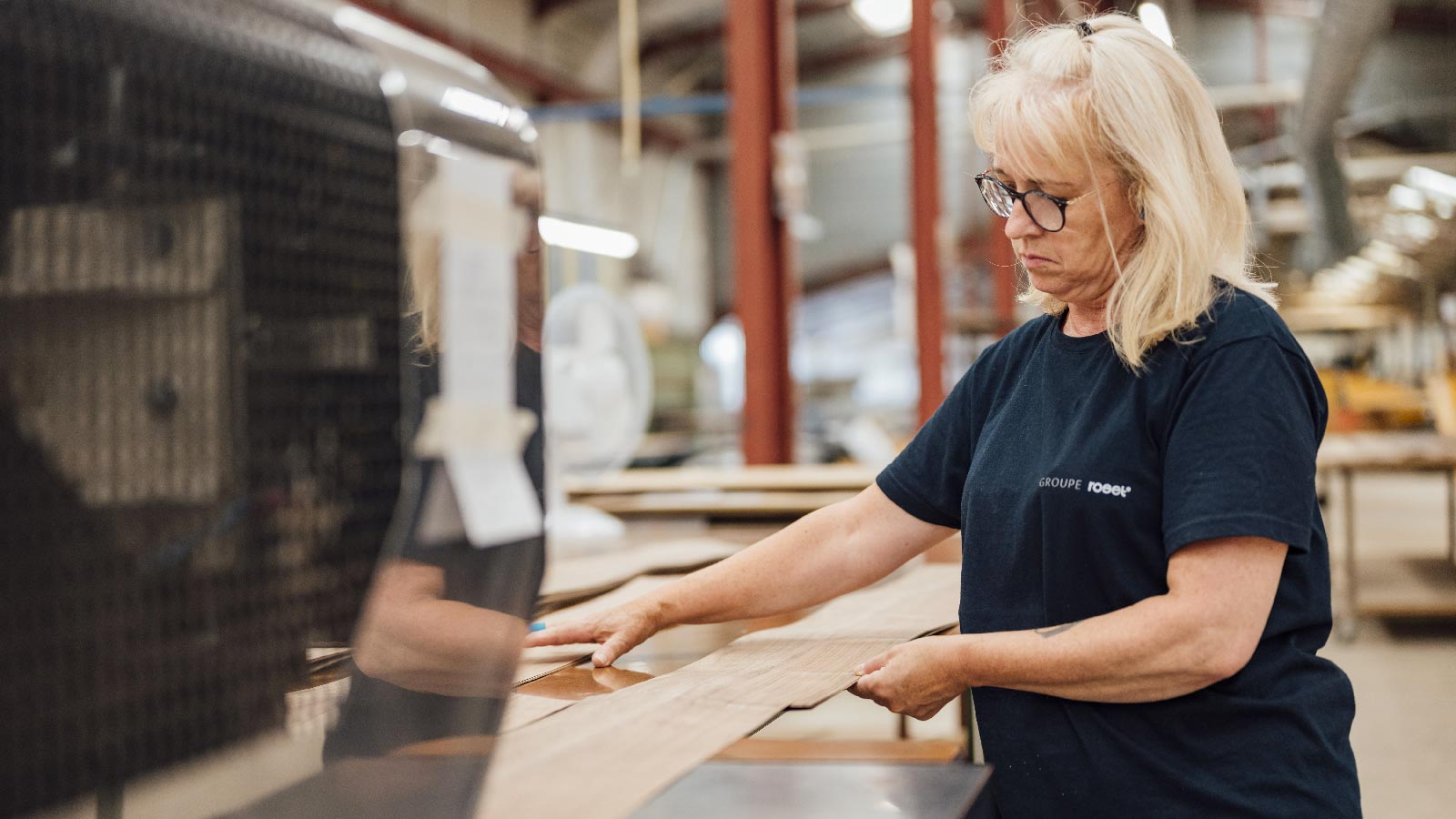
You’ll find Nelly Monteil at Saint-Jean-le-Vieux, in the Ligne Roset cabinet factory where she has run the veneering shop for three years, having made her way there through various positions. With an expert eye she receives, examines, selects, cuts and assembles sheets of noble woods (oak, beech, ash or walnut) destined for the shelving, cupboards, desks or even wardrobes of the collection.
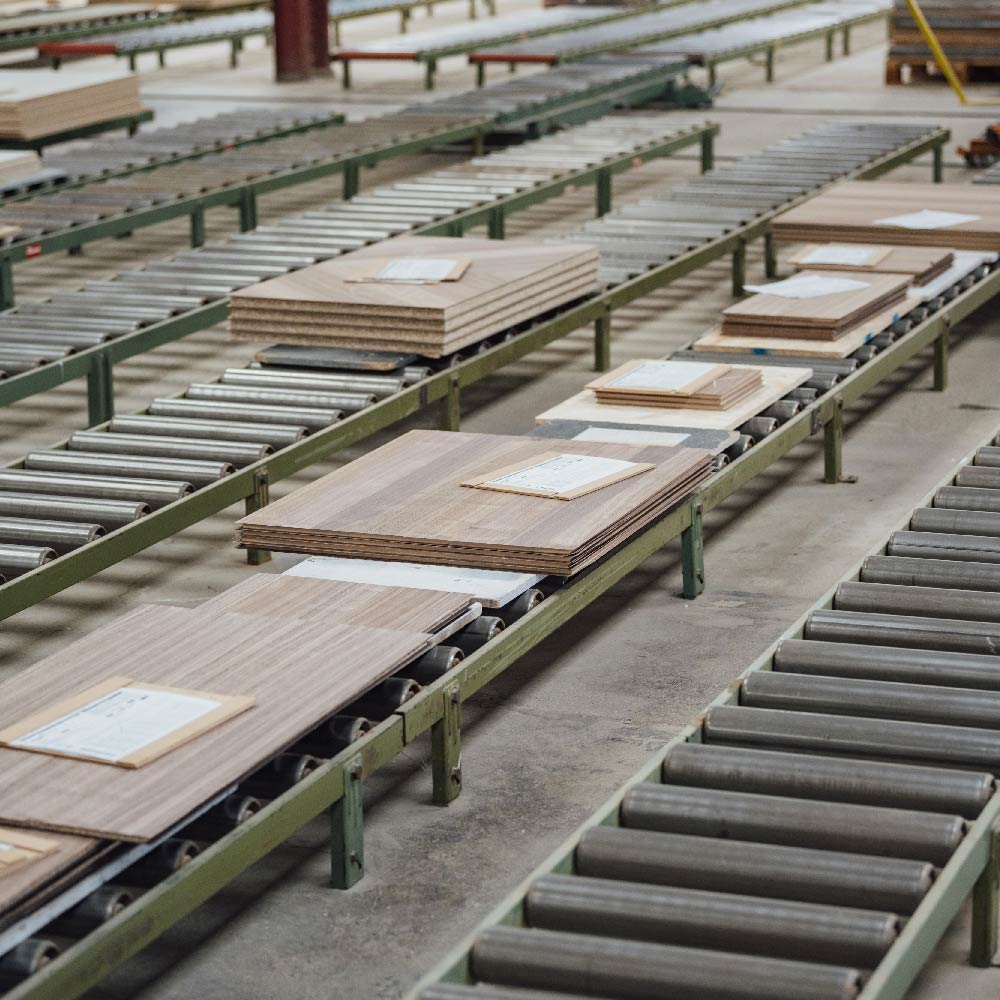
For Nelly, each morning begins with the trolleys of veneer filled with huge sheets of wood of various species and sizes, which are delivered daily to her station.
Once sorted and cut, the sheets will be skilfully assembled to create the panels which will ultimately cover the doors, drawers, back panels and sides of the large pieces in the cabinet collection.
These are available in two thicknesses, depending on the intended use – with the 0.9mm sheets exclusively reserved for use on the structures of chests, whilst the 0.6mm ones are used for the nobler, most visible sections such as fronts, these being the ones will give the finished piece of furniture its character and uniqueness.
This is why Nelly must sort them so attentively each day, for each order selecting those which offer the required quality and dominant color (light or dark).
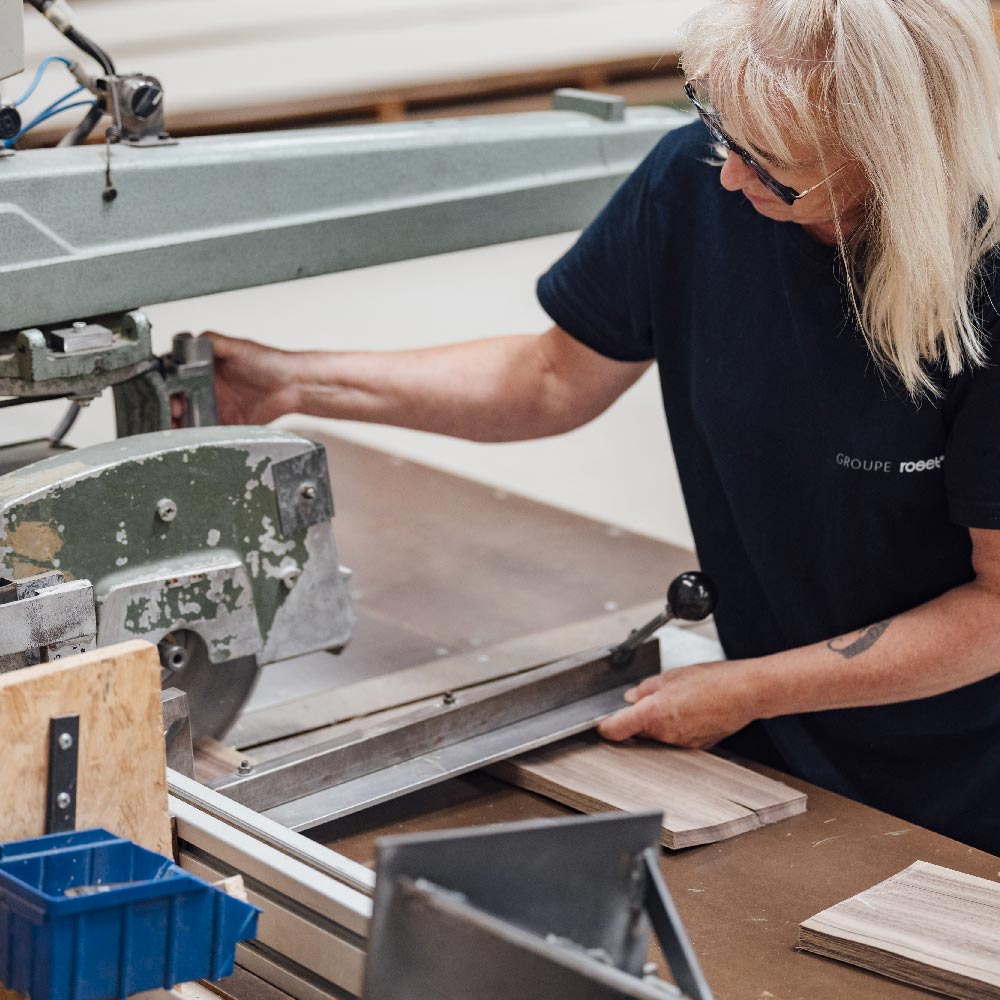
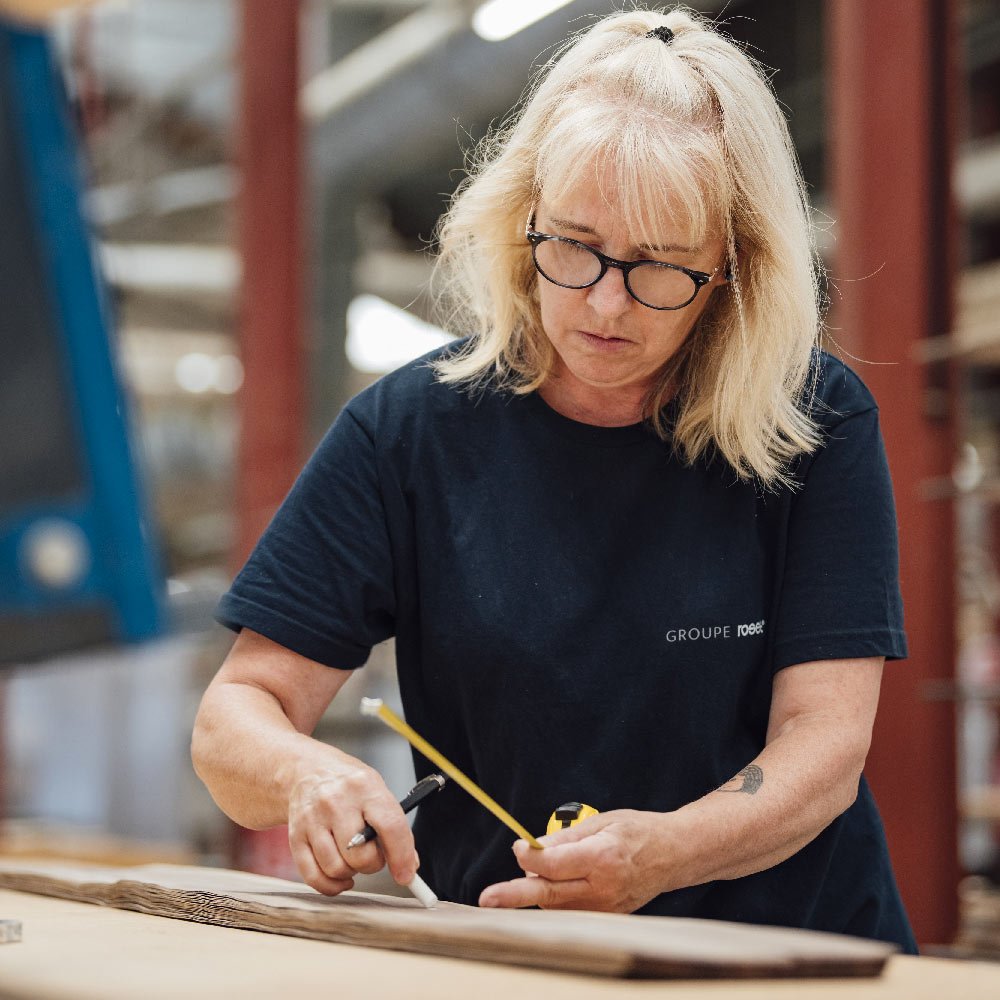
Then comes the marking-up, usually with chalk, of geometric bands which will then be cut first lengthways then widthways, using a saw and a guillotine, according to the “pattern” predetermined by Nelly.
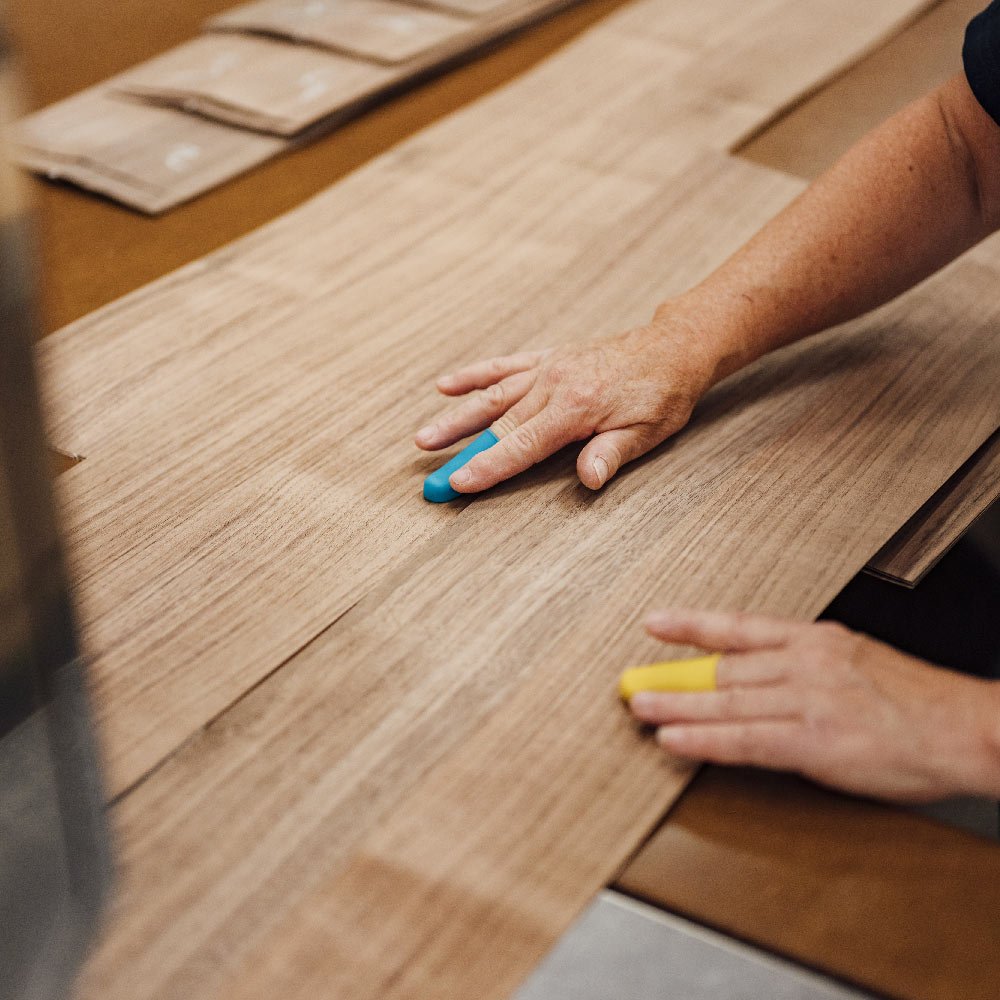
From these pieces, Nelly pieces together, like a puzzle, the patchwork which will create each panel. To this end, she assembles the bands side by side, according to their tones and visible veining, testing and adjusting until she finds the perfect combination.
"Variety and nuance are needed to create a harmonious effect without being monotonous. To achieve this, there are rules, such as avoiding clusters of knots and rough patches, or ensuring good color dispersal. Having said that, the exact way in which the piece is put together is first and foremost a matter of my taste and my judgment, which is subjective."
Once each composition has been decided on, the bands are glued together strip by strip, just a few millimetres in thickness, using an instant-set hot glue.
The resulting panels can then be reinforced with further threads of hot-melt adhesive strands, or even with an invisible dubbing. "To make it more sturdy !", explains Nelly.
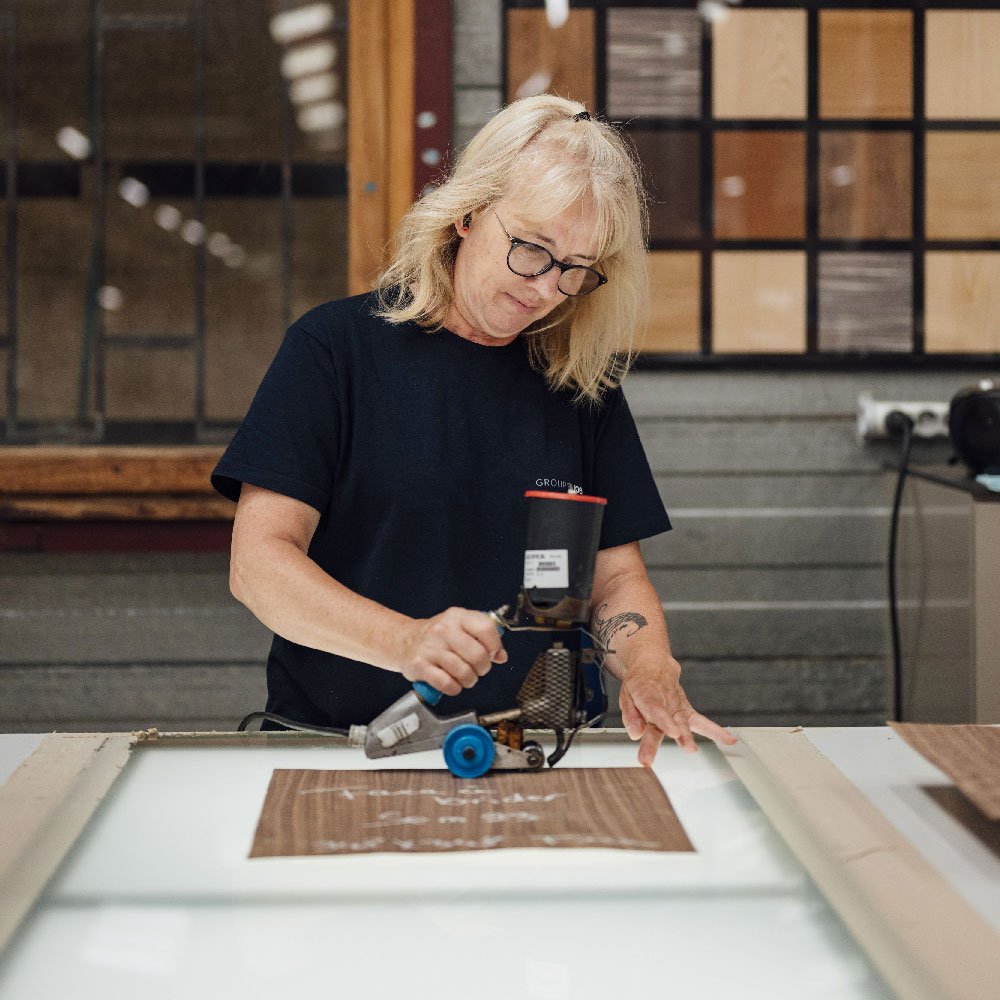
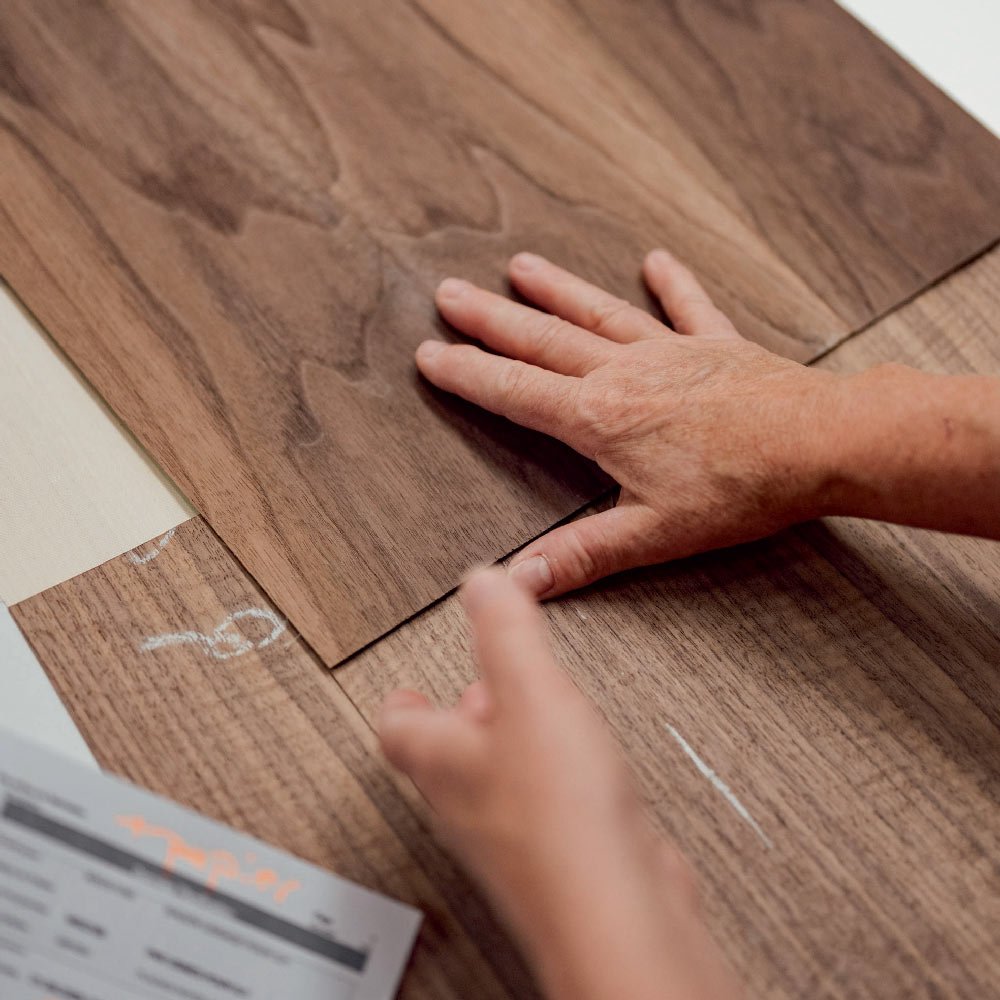
Amongst the wood species used in the workshop are oak, beech, walnut and ash – "one of the most difficult woods to work with as veneer as it can easily break. This demands lots of precision", explains Nelly.
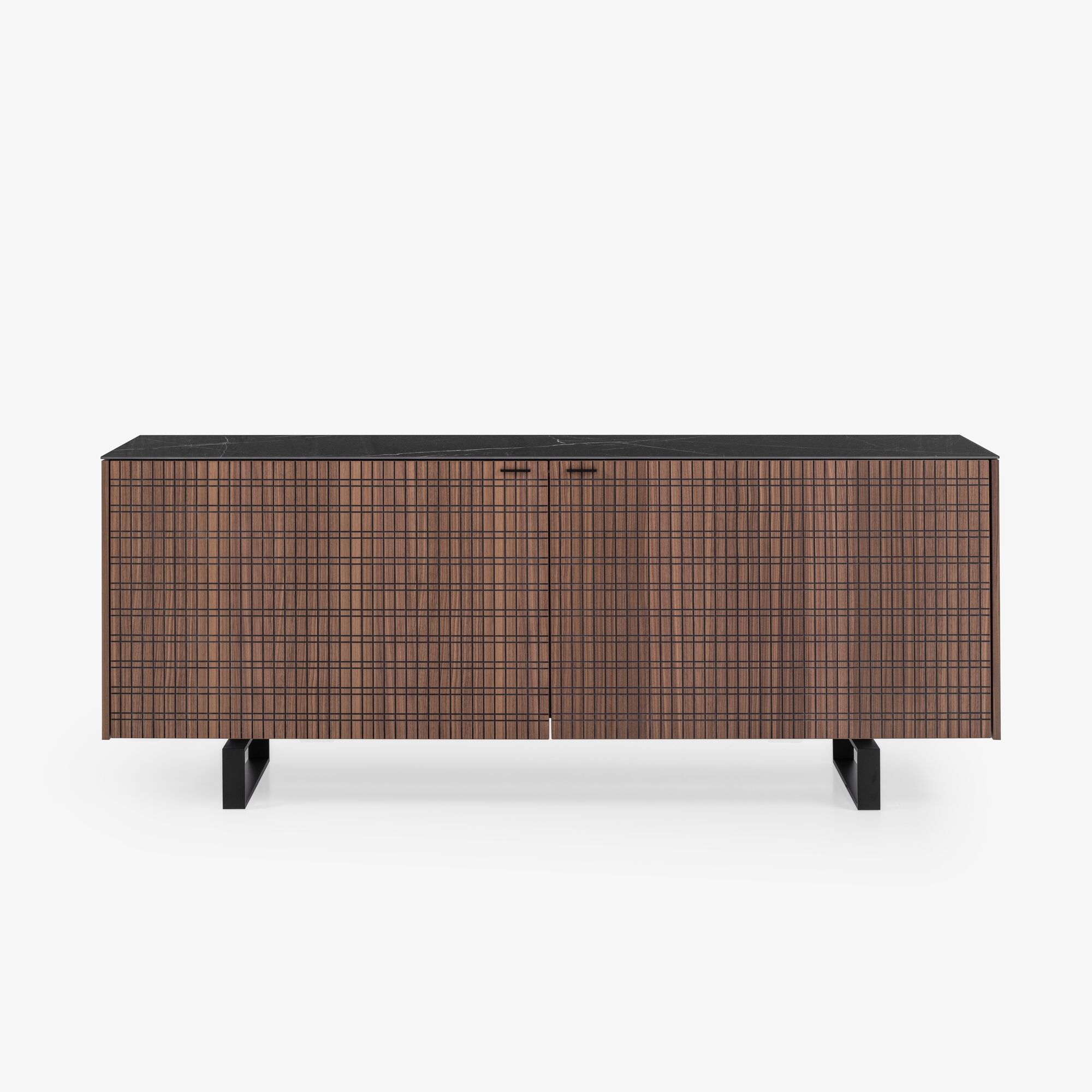
Precision which is all the more necessary when this finish takes on a starring role in a model such as the Kadora sideboard.
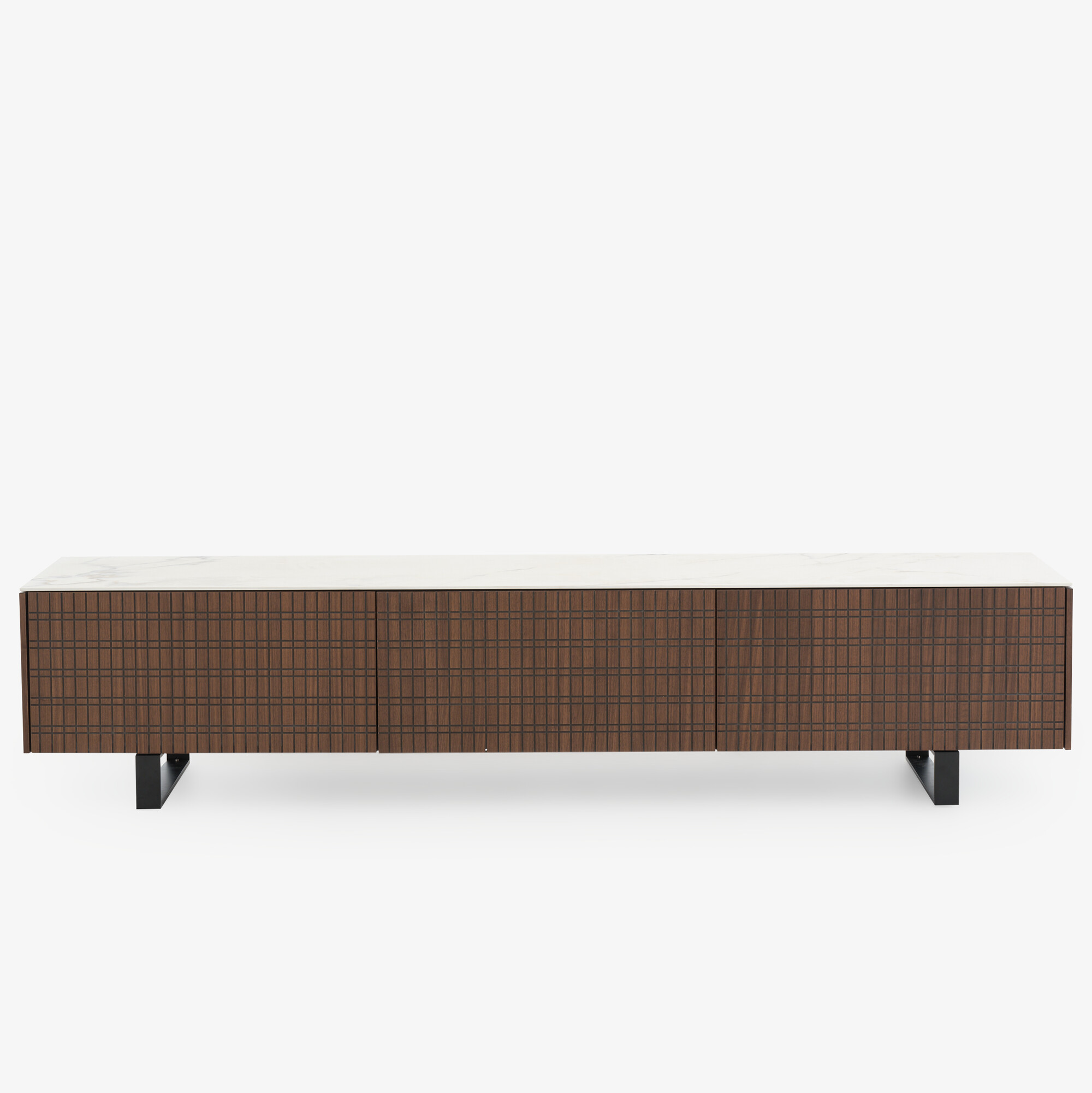
Its fronts are characterised by a grid pattern achieved by extremely precise machining of the veneer, creating a subtle relief effect which enlivens the surface of the piece, capturing light and revealing all the richness of the wood.
A meticulous task which is particularly representative of Nelly’s expertise with materials, which depending on the day and the workload, is sometimes partnered by a second person.
Then, at the end of the production line, there is one final person responsible for the Ligne Roset quality control phase.
Our veneered furniture



Discover More
Our online magazine offers a glimpse into our collections and sources of inspiration. To discover the full content, including our creations, atmospheres, craftsmanship and exclusive inspirations, we invite you to visit one of our boutiques to browse the latest issue and fully immerse yourself in the world of the brand by visiting your nearest store.